
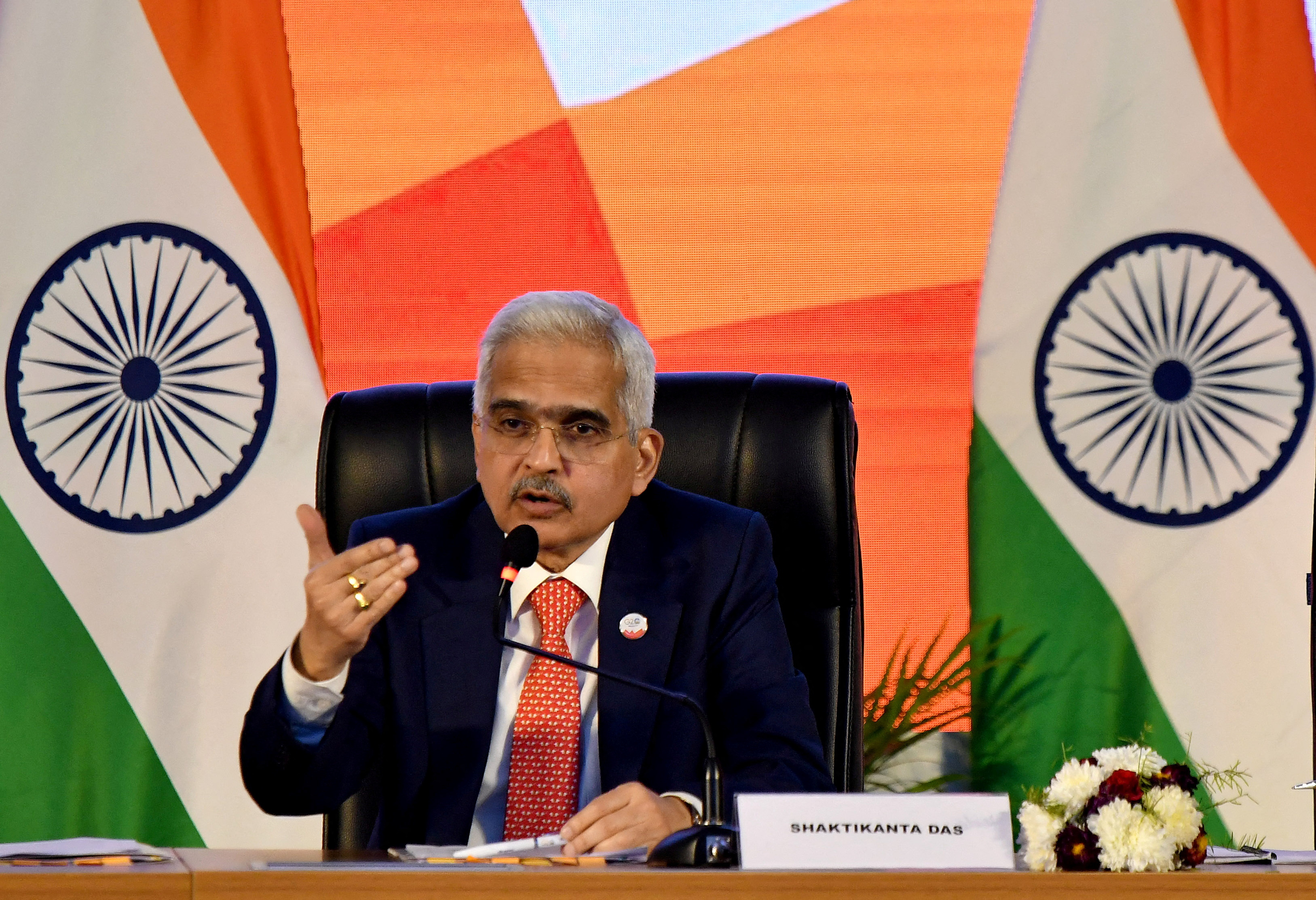
MUMBAI, June 25 (Reuters) - Reserve Bank of India Governor Shaktikanta Das said on Tuesday that India needs a clear and unambiguous focus and commitment to lower inflation to its 4% goal.
India's annual retail inflation fell to 4.75% in May, down from 4.83% in April but still well above the Indian central bank's medium term target.
"When dealing with the challenge of inflation, a single wrong move can distract you, throw you off track and coming back on track would be far more costly and will much more time," Das said in a speech.
"We cannot afford to make any mistake, cannot afford any policy error," he said, adding: "There cannot be any wavering or any distractions at this stage. Because in case of any distractions, it will severely compromise growth."
Das said despite inflation having moderated in May, any severe weather-related shock, could push inflation back above 5% and with growth remaining robust, the RBI is focused on bringing it firmly towards target.
India's growth momentum remains strong and could improve further in coming months, Das said, adding that he was confident of the economy growing 7.2% in the current fiscal year to March.
The South Asian country was on a path to achieving 8% growth on a sustained basis, he added.
The RBI Governor also said private sector capital expenditure has started to pick up and there was clear evidence of it, which should help growth further.
However, to achieve sustained high growth, India would need to adopt a multi-sectoral approach and cannot depend on manufacturing or services exports alone, Das said.
There is still scope for work in the agricultural sector, particularly with regards to supply and value chains, he added